

A Vibrant Mixed-Use Rental Community to Enhance Public Space, Connectivity and Car-Lite Living
In Development
1964 Oak Bay

Want more details?
Project Pillars
Vibrancy in Oak Bay Village
Activating the streetscape with new retail and live-work spaces, adding energy and engagement to the village Enhancing the pedestrian experience with inviting storefronts and a thoughtfully designed public plaza Encouraging a 15-minute city lifestyle, where daily needs are met within a short walk or bike ride

High-Quality Public Realm
Introducing a welcoming public plaza that enhances gathering spaces within the small urban village. Improving pedestrian experiences with wider sidewalks, tree-lined boulevards and an enhanced streetscape. creating seamless connections between commercial spaces and the surrounding neighbourhood

Thoughtful Design
Delivering high-quality rental housing that blends into the evolving fabric of Oak Bay Avenue. Thoughtful design that respects both commercial and residential character, ensuring a balanced transition between the village and nearby homes. Architectural elements that contribute to the identity of the neighbourhood, fostering a sense of place
Project at a Glance

Height
6 storeys
Site Area
11,007 sf
Floor Area
35,198 sf
FSR
3.20
Site Coverage
69%

North Setback (Rear) 1
4.00m
North Setback (Rear) 2
1.33m
South Setback (Fronting Oak Bay)
3.50m

Number of Homes
42 Homes
Live-Work Lofts
4 Homes
Studios
8 Homes
One Bedroom
18 Homes
Two Bedroom + Den
7 Homes
Three Bedroom
5 Homes

Car Parking Stalls
2
Short Term Bike Stalls
6
Long-Term Bike Stalls
59
Tenure
Rental
Adaptable Units
>20%
Area & Site Context
This area of South Jubilee is well known for its harmonious diversity of commercial retail, essential amenities, mixed-use multi-family residential buildings and single-family dwellings.
It serves as a destination for many in the city due to its well-known local shops and pedestrian- friendly design. The context of the small urban village offers a wide range of businesses, services and transit—and is also less than 1km from key employment centres such as Royal Jubilee Hospital.
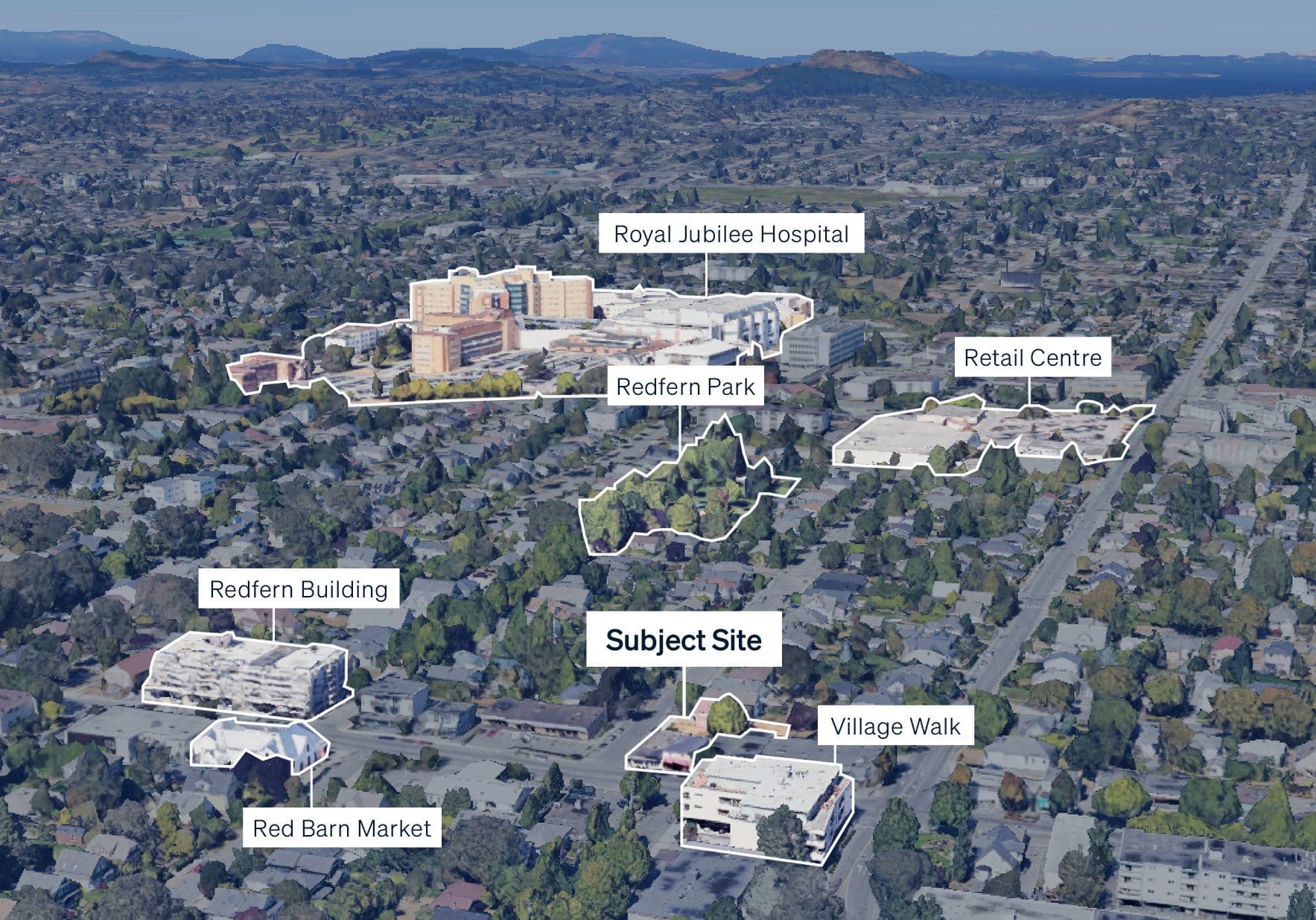
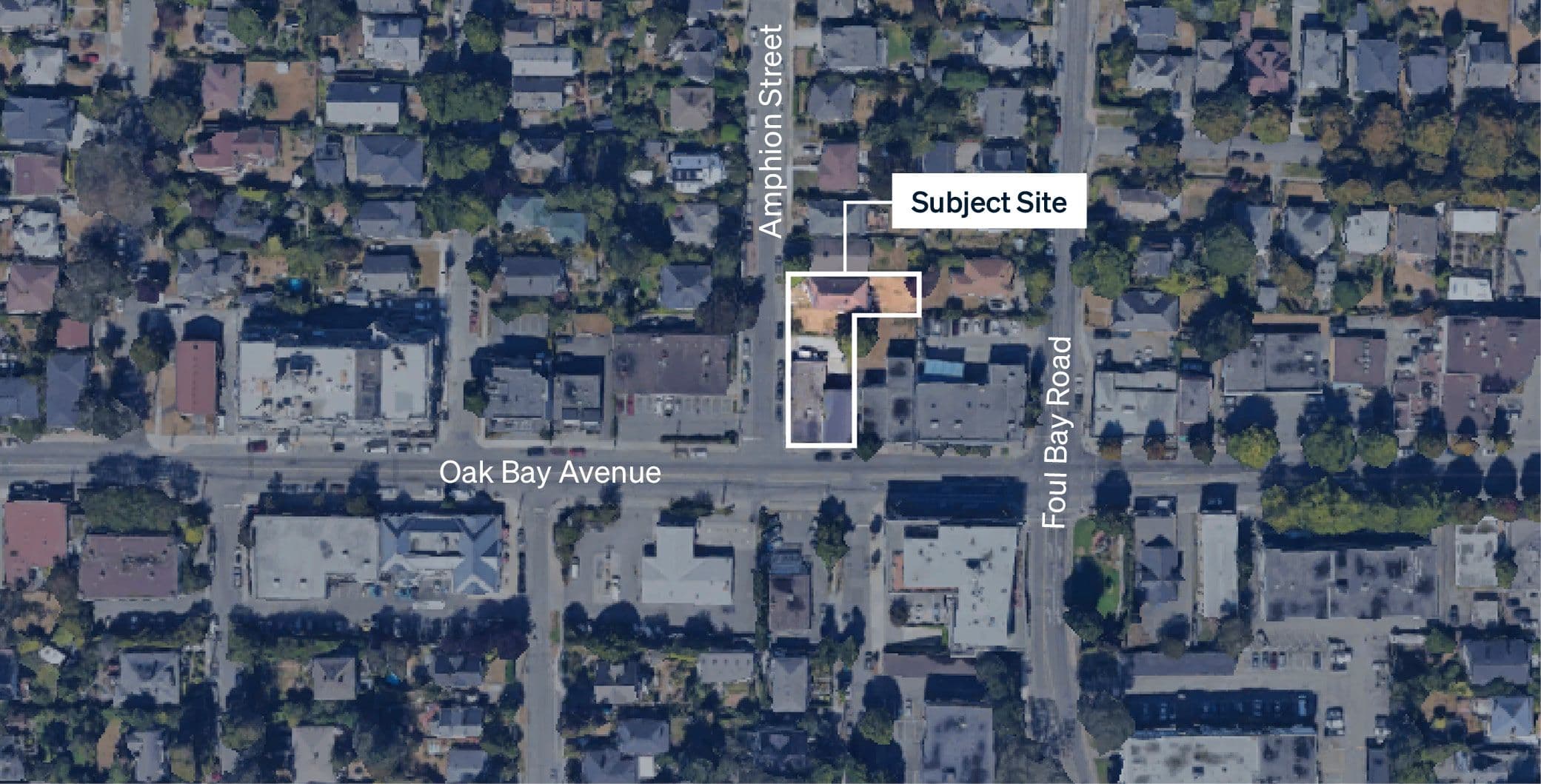
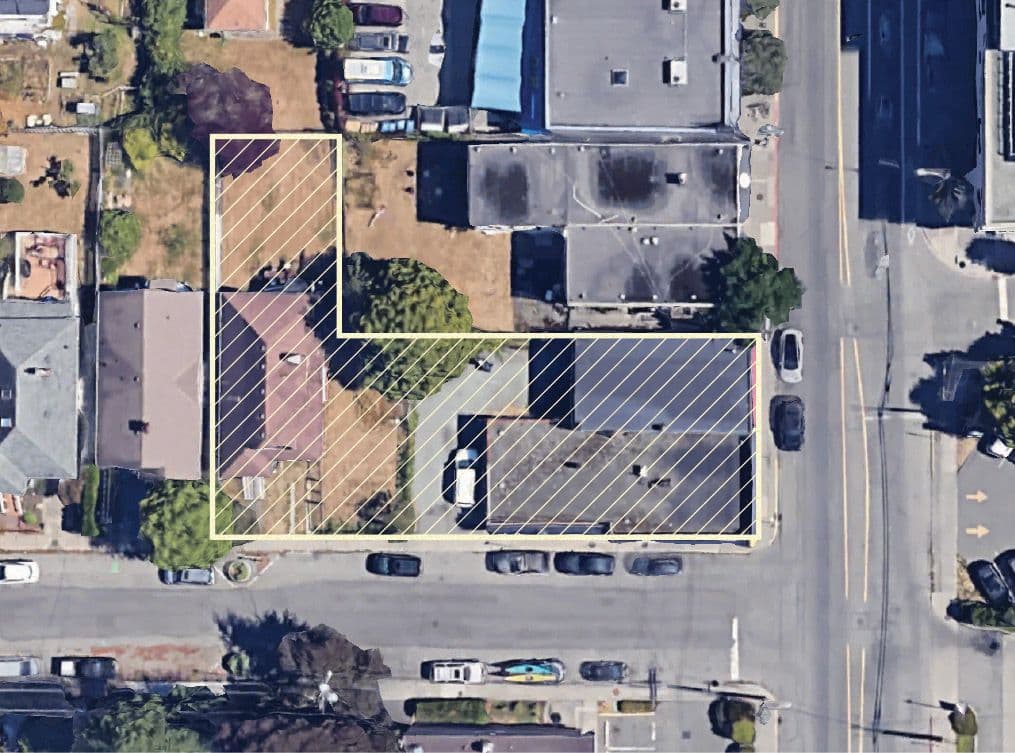
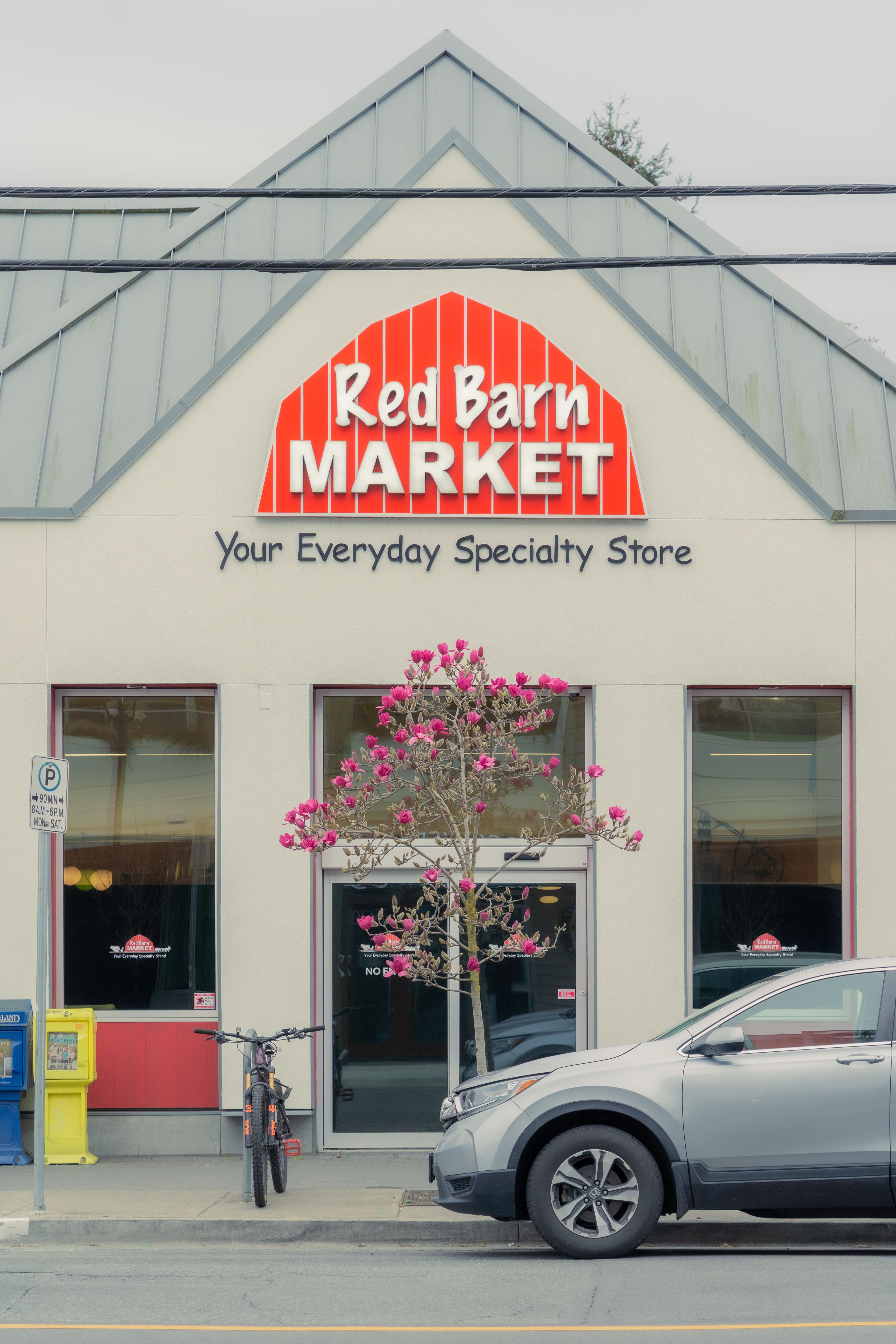
Located at the corner of Oak Bay Avenue and Amphion Street, the subject site is a consolidation of one commercial property and one single-family residential property.
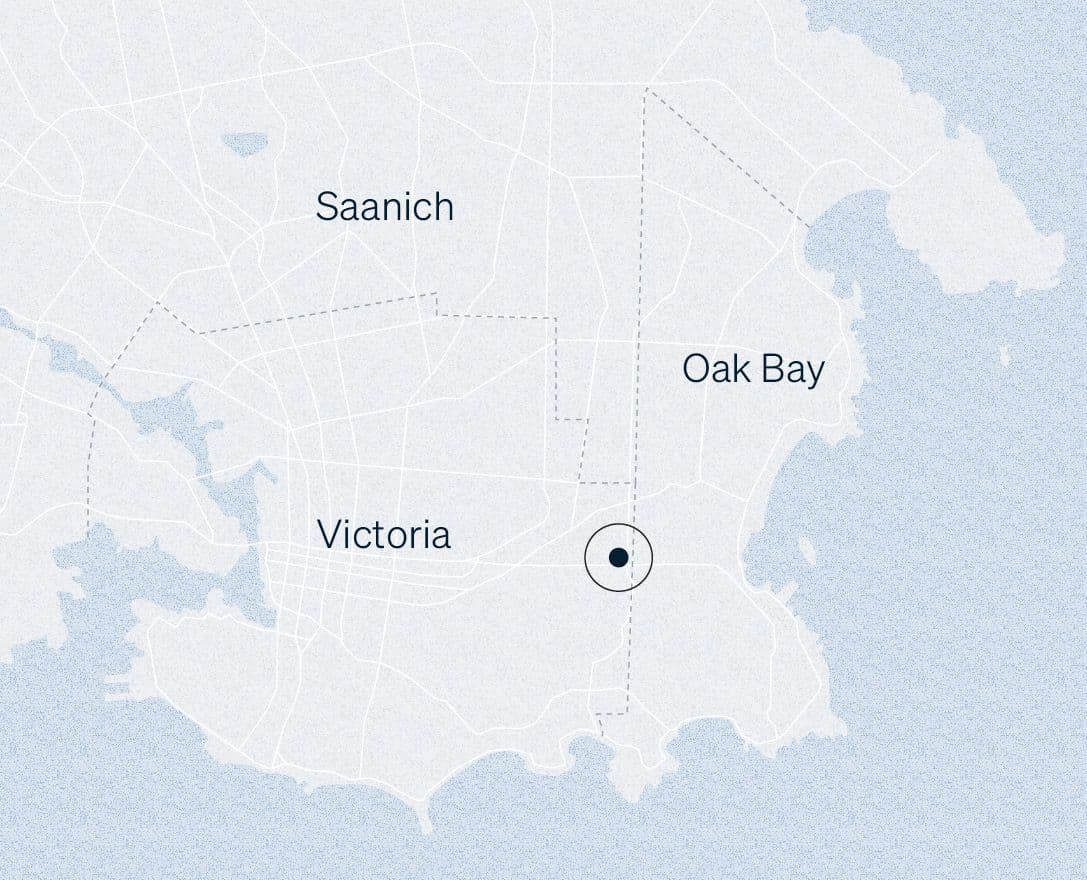
The site is located approximately 3 km east of Victoria’s downtown area in the Jubilee South neighbourhood. It is also located approximately 2.5 km south of Camosun College Lansdowne Campus and approximately 5 km south of the University of Victoria.
The area features a fine-grain road pattern with short blocks, providing multiple connectivity options in all directions. Key corridors like Oak Bay Avenue facilitate East/West movement, while Foul Bay Road and Richmond Road support North/South travel, serving vehicles, buses, pedestrians and cyclists.
The final transition of the building to the rest of the residential street begins where the live/work homes end.
A generous open space offers a few parking stalls for the building, adjacent an open breezeway which delivers a strong visual connection to the vibrant garden at the back of the site.
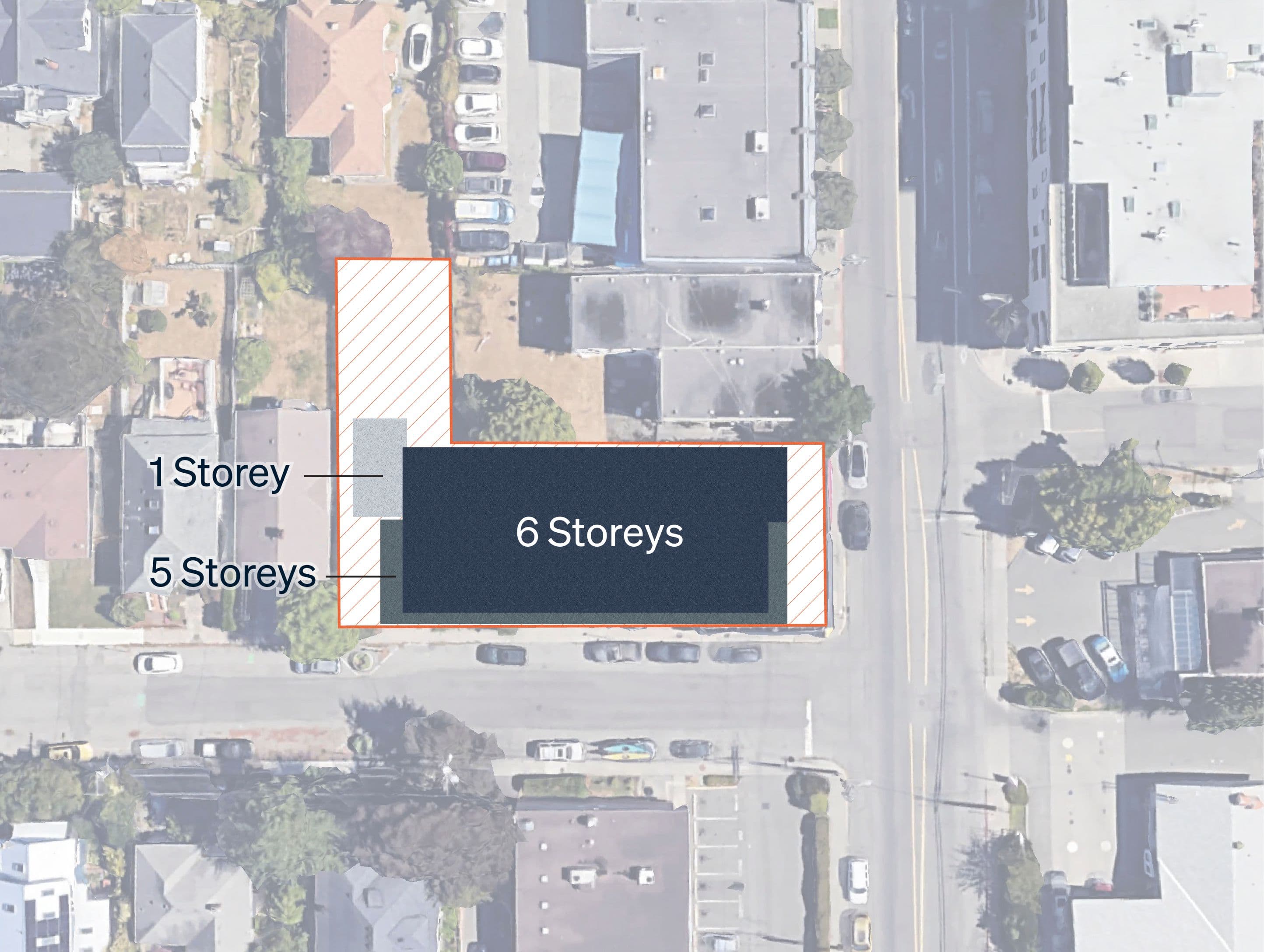
Site Plan
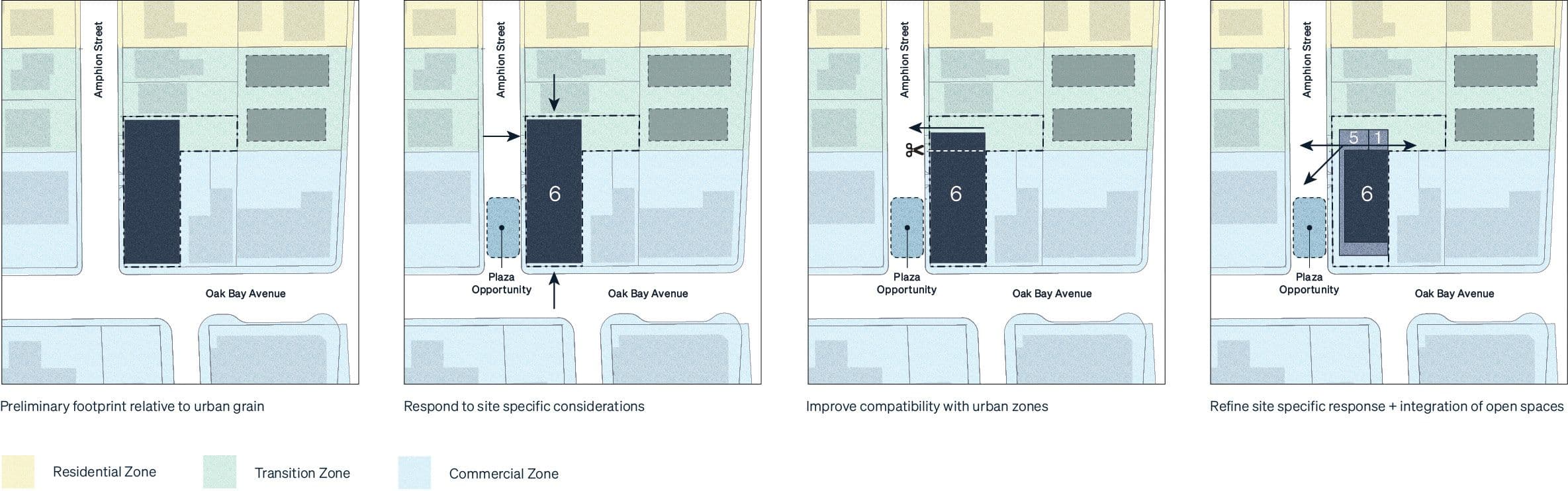
The programming of the building is configured to respond to both the commercially oriented Oak Bay Avenue alongside the calm and residential nature of Amphion Street.
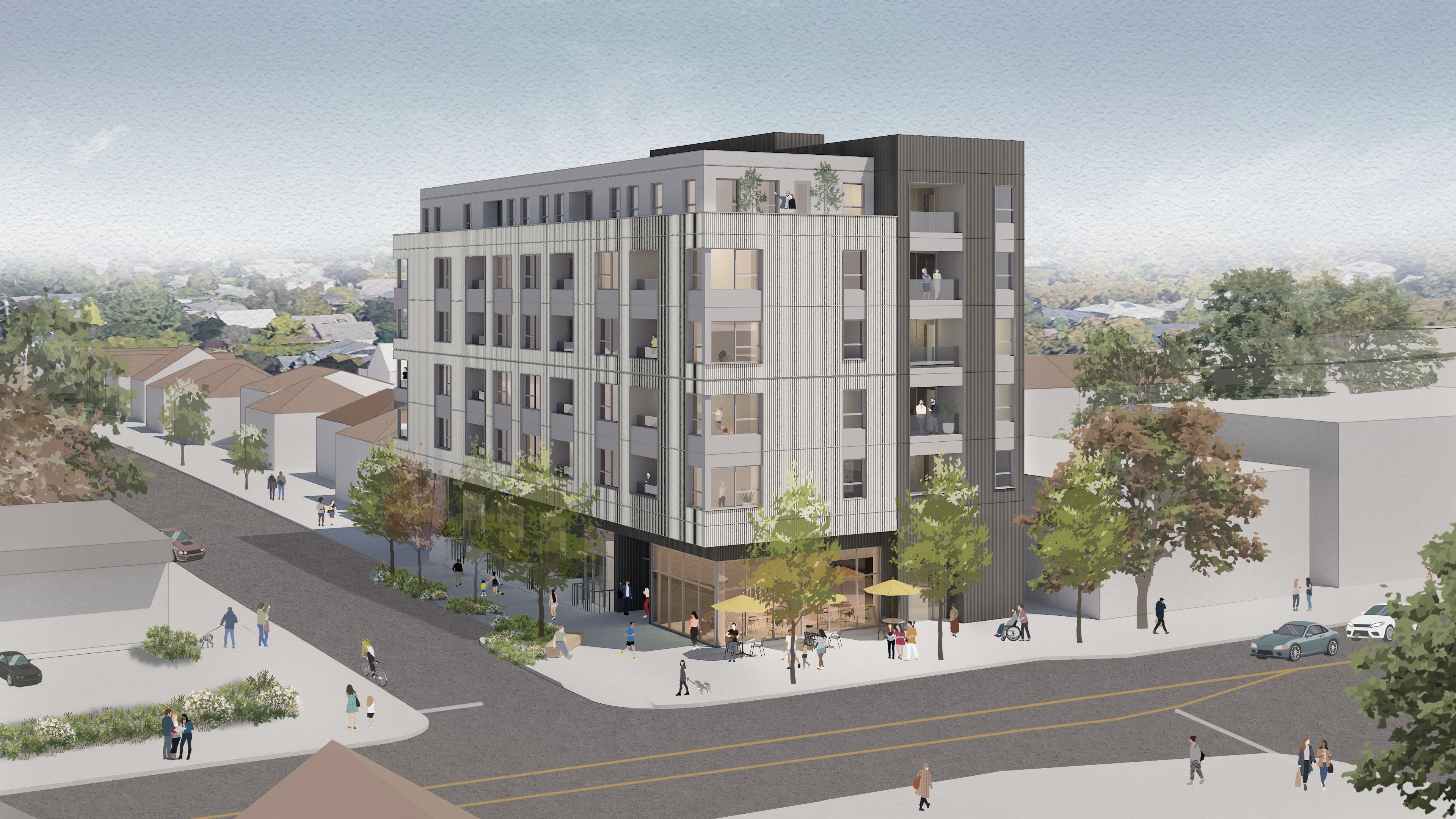
The ground floor of the building offers a generous setback along Oak Bay Avenue, allowing for an outdoor patio for a café, restaurant or other commercial retail unit (CRU) business that will act as the commercial anchor on the street corner.
Along Amphion Street, the public nature of the ground level program begins to transition towards more private space. The CRU ends at the residential lobby, after which ground oriented live/work lofts bring a gentler activation along the street edge. A small setback from the property line to the live/work lofts offers a softening of the sidewalk to the front entrances of the homes with a raised planter.


Design Strategy
The architectural expression of this proposal has been thoughtfully refined through a site-specific design approach. Guided by core principles, the design seeks to minimize massing impacts on neighbouring properties, respond sensitively to the surrounding context, and contribute meaningfully to the architectural character of the South Jubilee neighbourhood and its small urban village fabric.
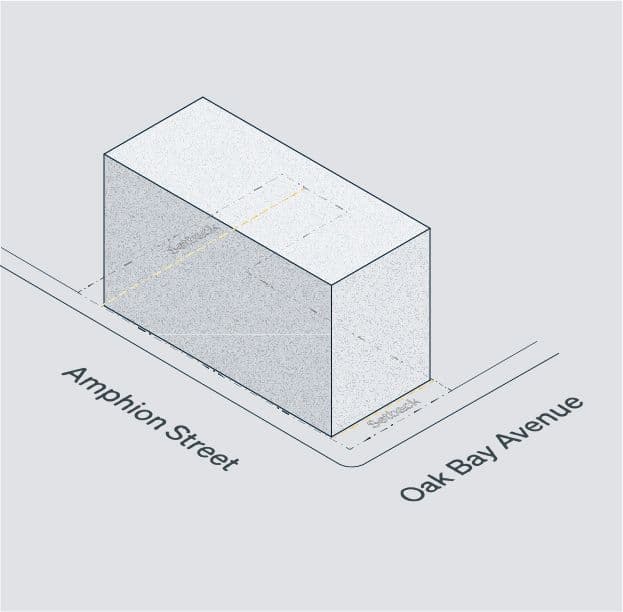
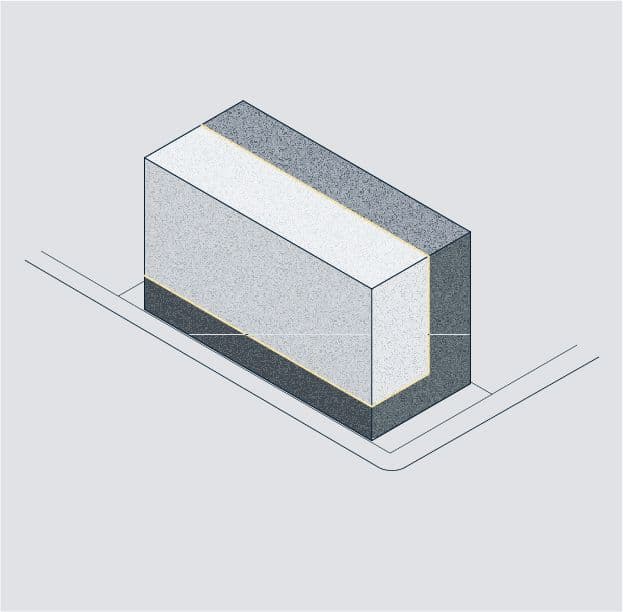
Concept Refinement
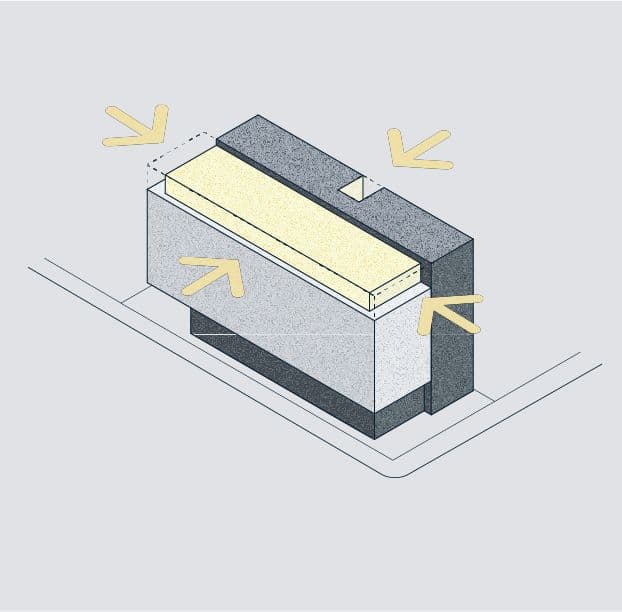
Building Massing
Acknowledge primary setbacks at north and south property lines
Split building form to allow site specific response at neighbouring conditions
Create set backs at ground level to provide a more generous public realm
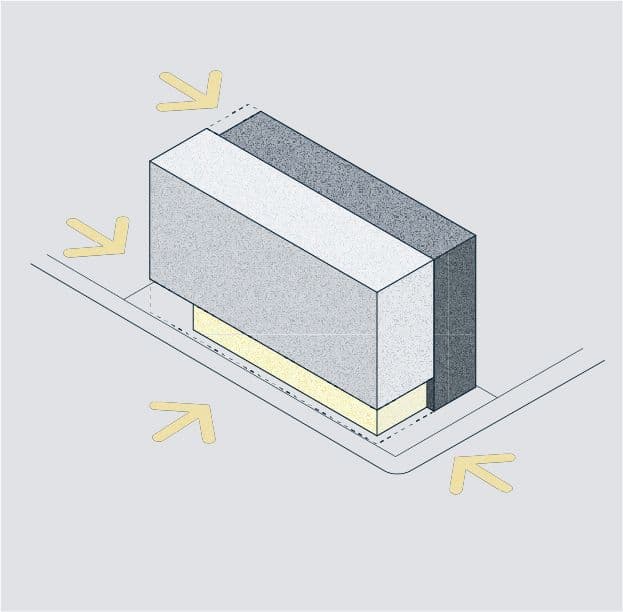
Create set backs at upper level + east wall to reduce building mass
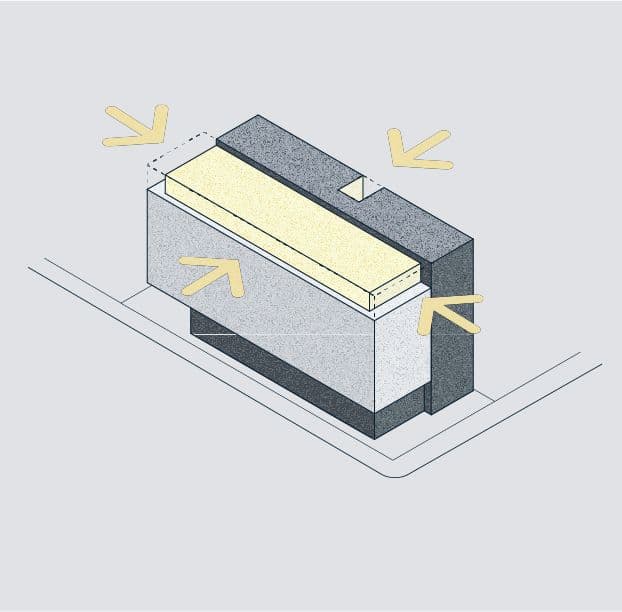
Articulate architectural elements to simplify + refine building expression
Renderings
Aerial view at Oak Bay Avenue and Amphion Street
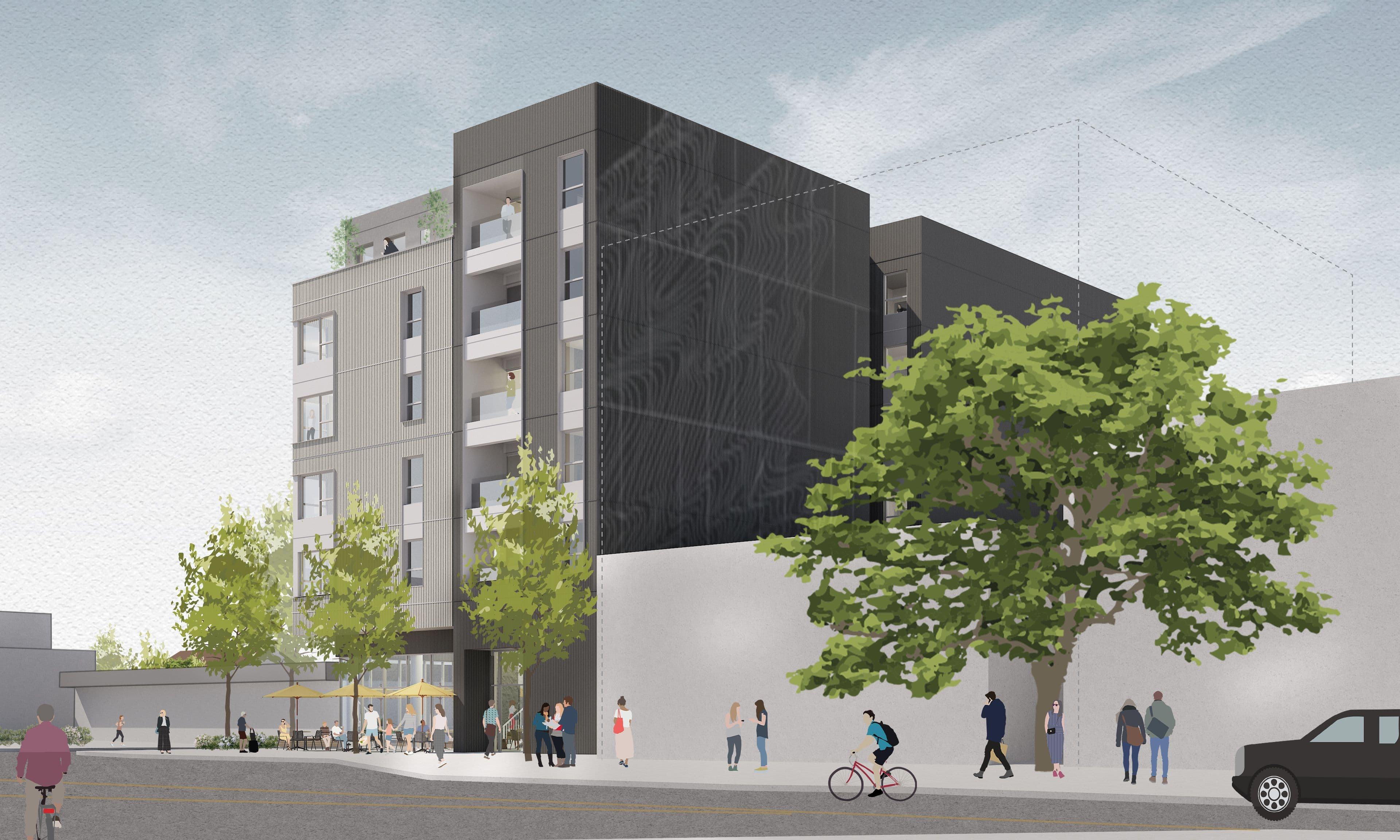
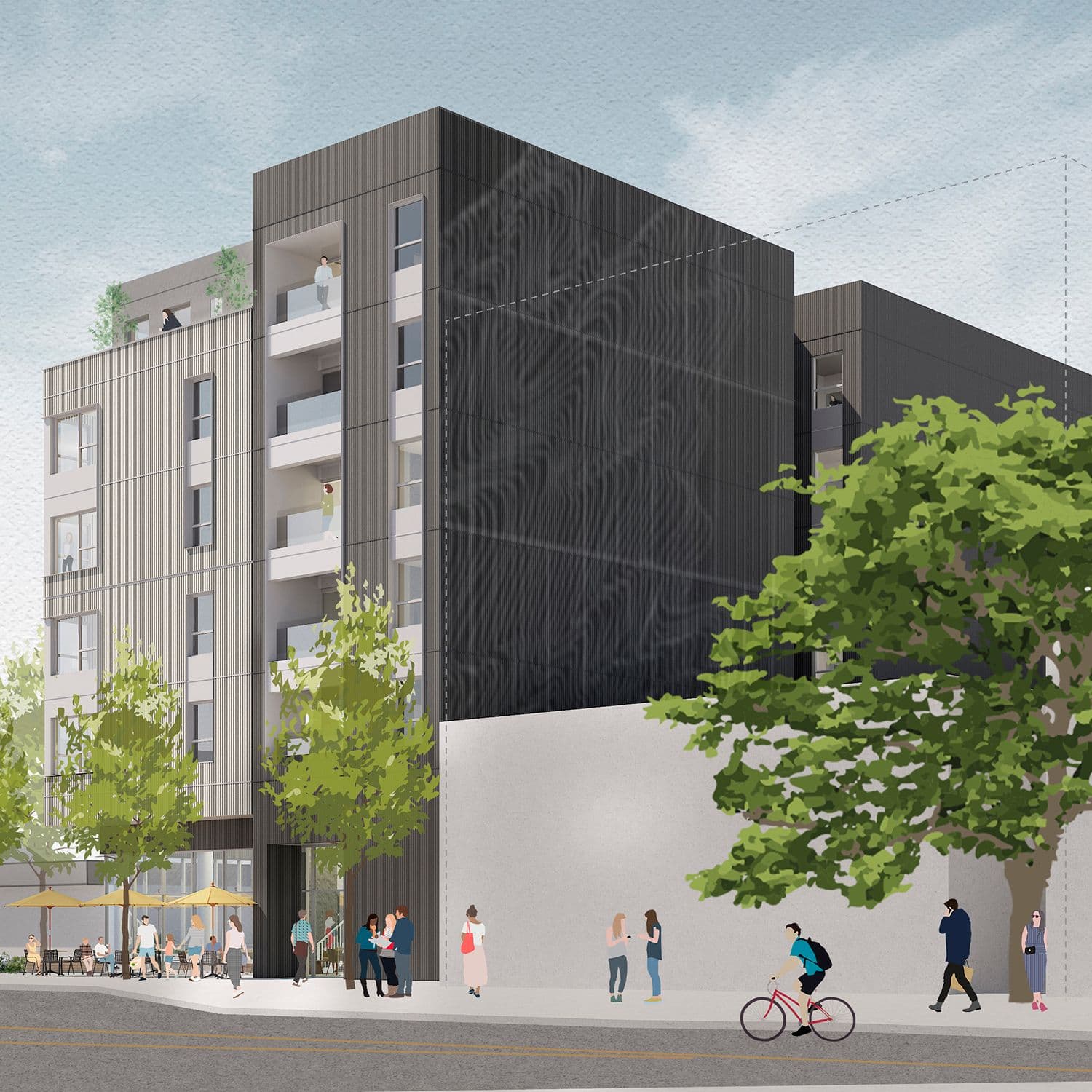
View along Oak Bay Avenue, looking north
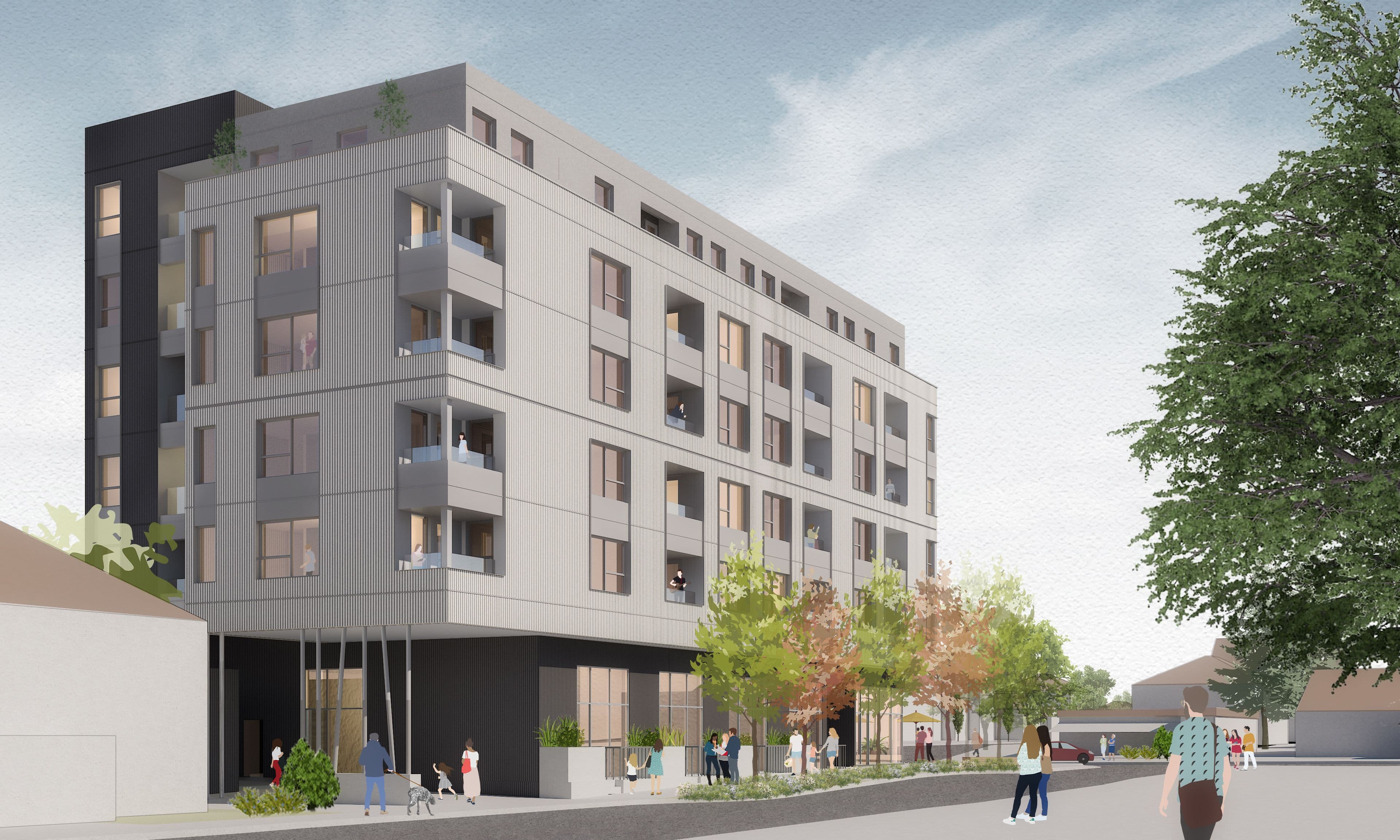
View along Amphion Street looking towards Oak Bay Avenue
Shadow Studies
The Surrounding Community and Environment
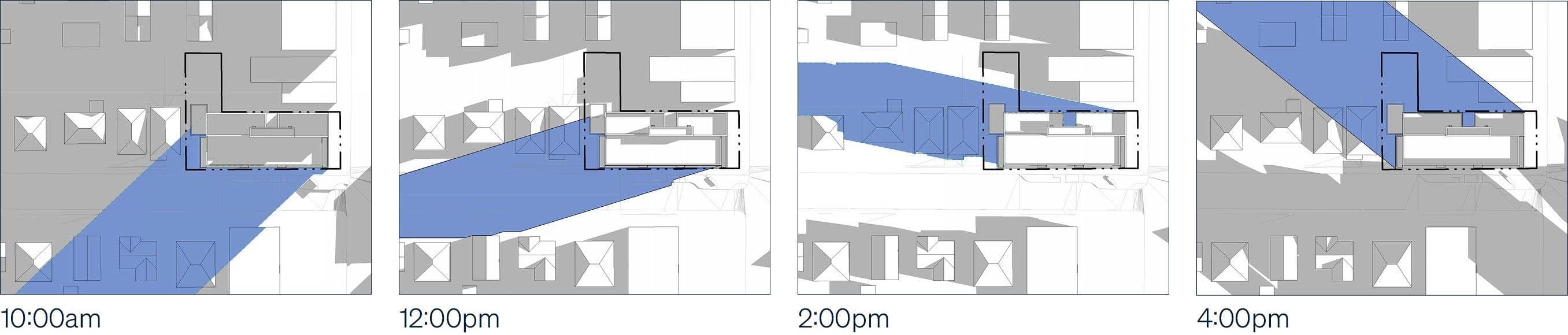
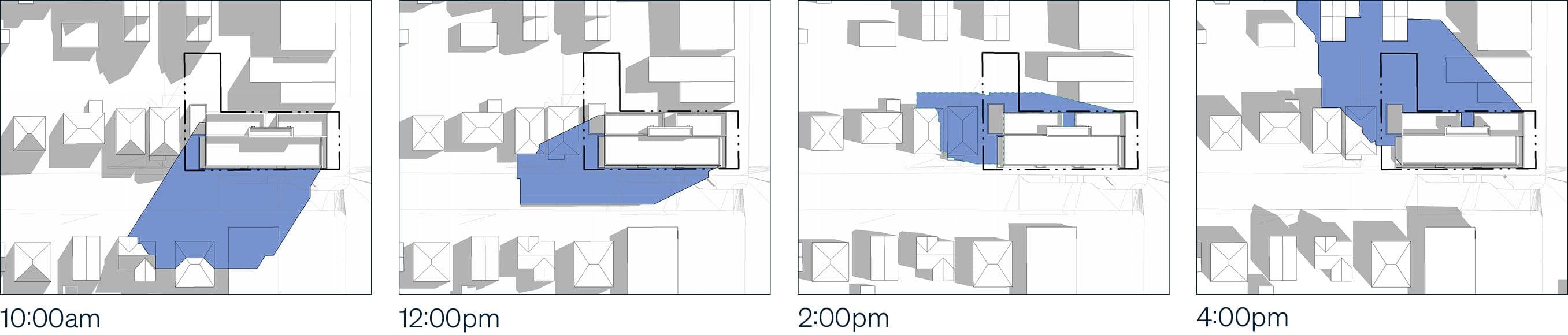
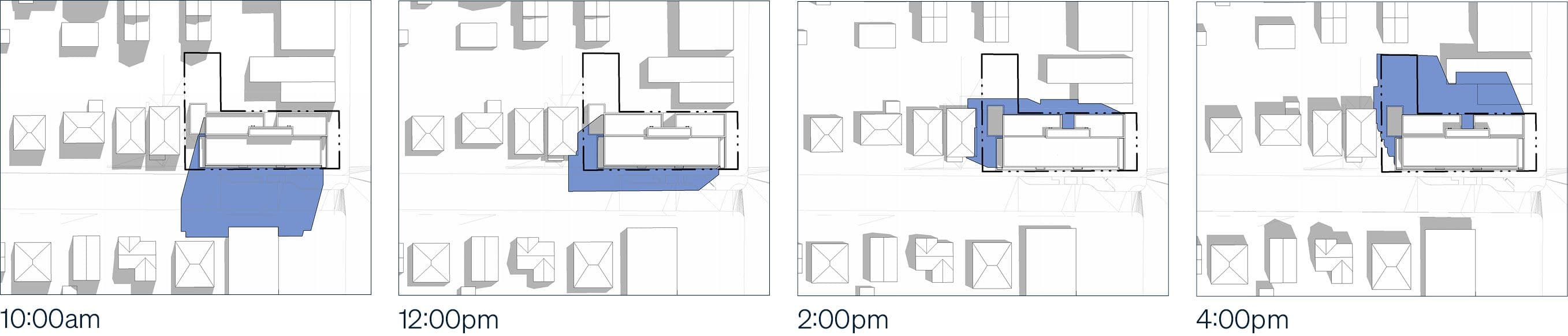
Shadow analysis influences the building's design, ensuring minimal impact on the surrounding community and environment. Thoughtful setbacks and tiered levels are incorporated to allow natural light to permeate the site throughout the year, while still meeting the community's housing needs.
Winter Solstice
Equinox (Spring/Fall)
Summer Solstice
Mobility Context
Vibrant & Well-Connected
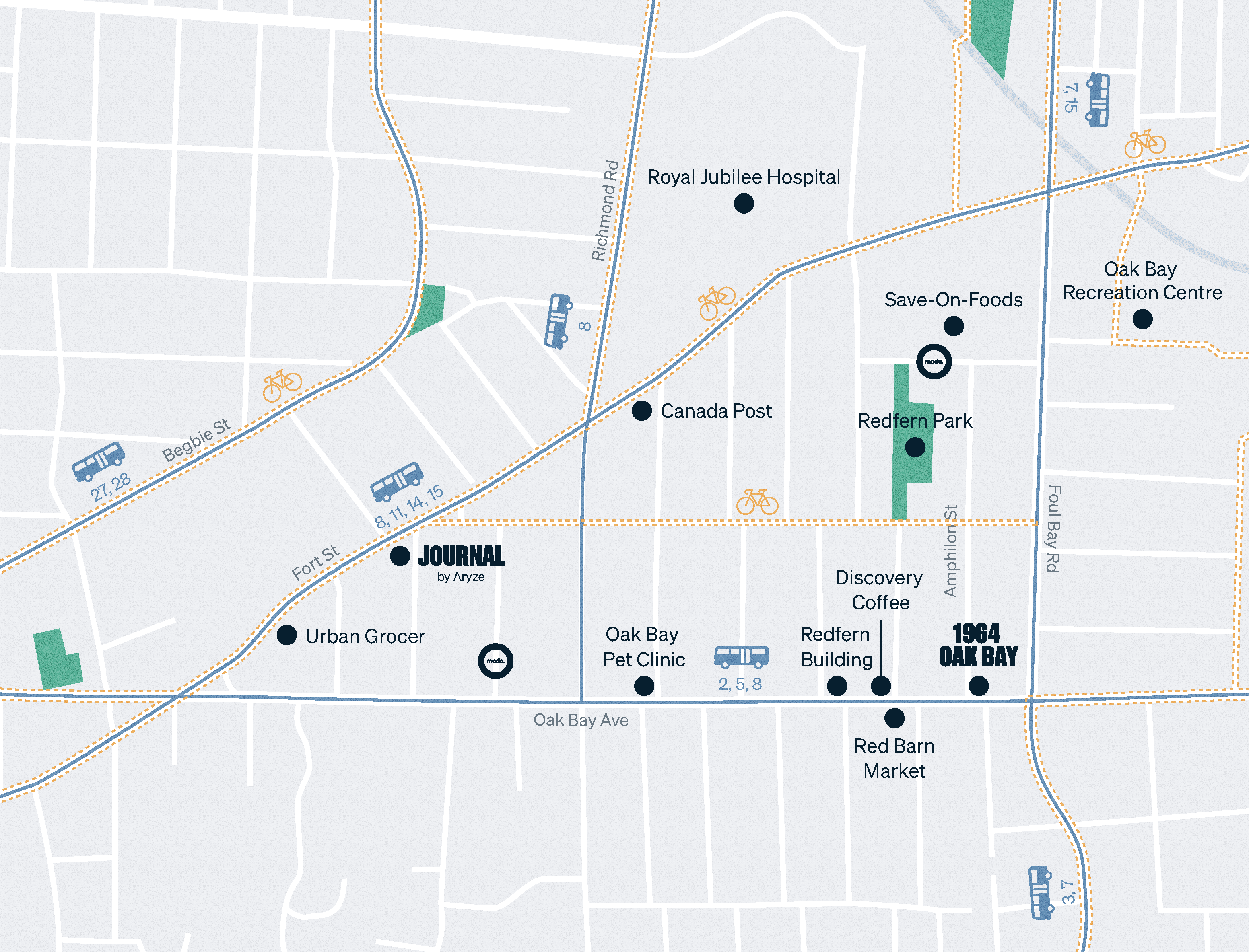
The South Jubilee neighbourhood—and specifically the Oak Bay Village—features a fine-grain road pattern with short blocks, providing multiple connectivity options in all directions. Key corridors like Oak Bay Avenue facilitate East/West movement, while Foul Bay Road and Richmond Road support North/South travel, serving vehicles, buses, pedestrians and cyclists. We are exploring the opportunity to narrow a portion of the Amphion Street roadway to divert non-local traffic and lower vehicle speeds while maintaining essential mobility and services for residents.
The subject site is located within a well-connected, walkable neighbourhood that supports a range of transportation options. Its proximity to frequent transit routes, cycling infrastructure and key amenities makes it an ideal site for a car-lite lifestyle.
Located just 2.8 kilometres east of Downtown Victoria, the site sits within a walkable and transit-rich environment, with seamless access to key destinations such as Camosun College (2.5 km) and the University of Victoria (5 km). Oak Bay Avenue itself is a key arterial route that links neighbourhoods, commercial areas and educational institutions, making it a strategic corridor for daily movement across the city.
Cycling & Pedestrian Networks
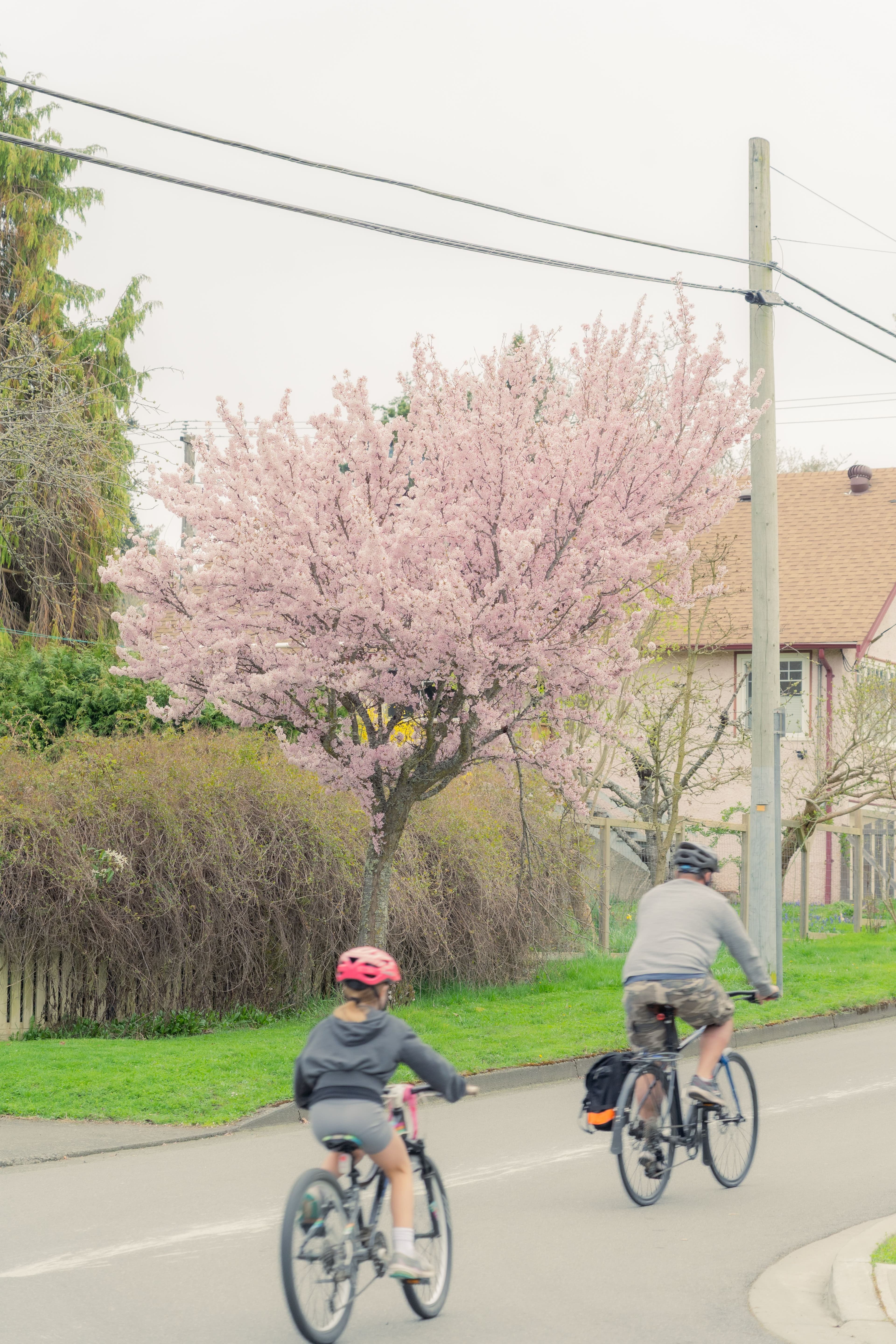
The site is highly supportive of active transportation, with strong connections to both the cycling and pedestrian networks. Fort Street and Pandora Avenue provide nearby access to Victoria’s AAA (All Ages and Abilities) protected bike lanes, offering a safe and direct route downtown. Bike lanes on Foul Bay and Henderson Road connect riders to Camosun College and UVic.
Transit
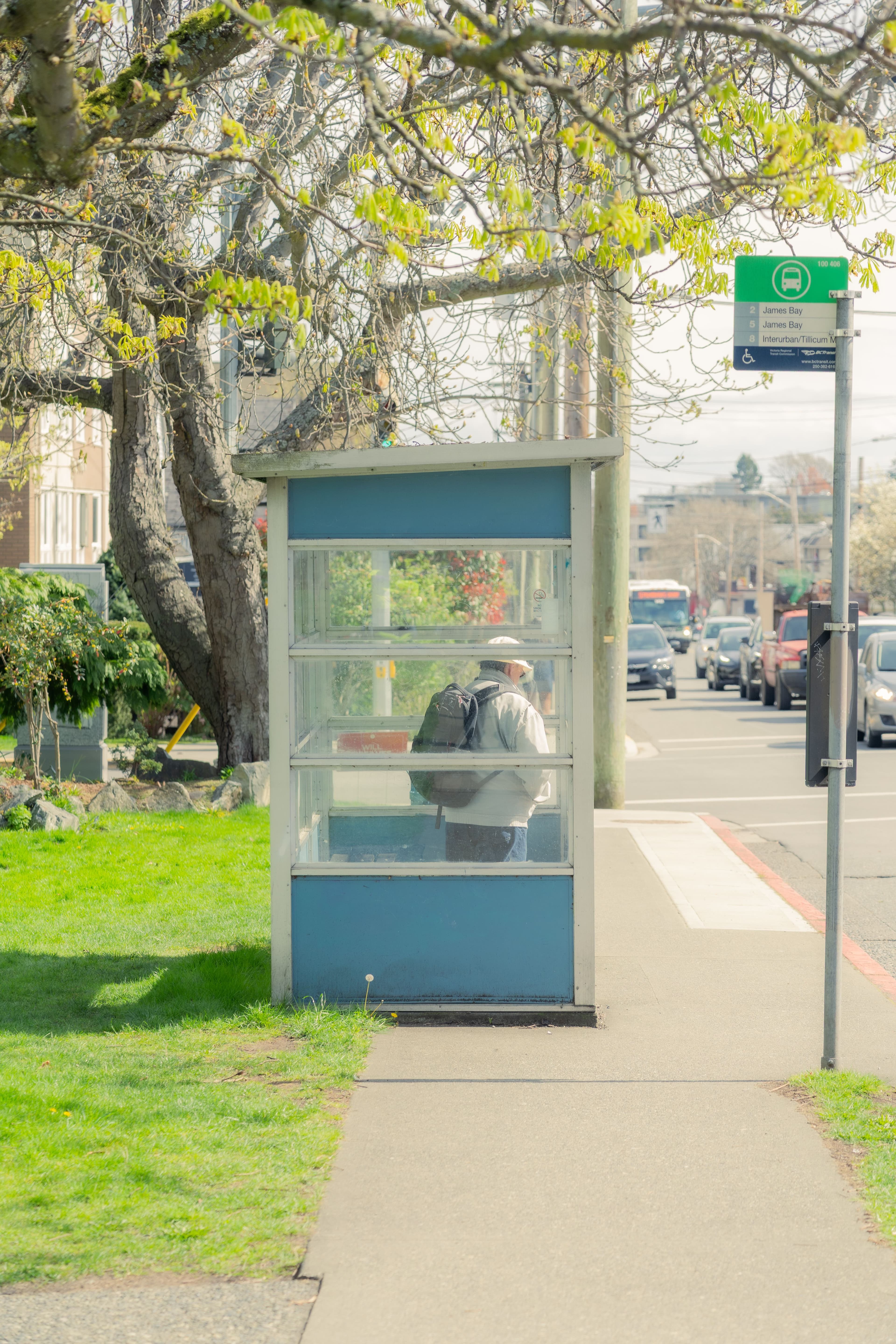
1964 Oak Bay Avenue is exceptionally well served by public transit. Eight routes are accessible within an 800-metre radius, including frequent service routes like #2, #5 and express #7, with stops directly in front of the site. Travel times are short—5 minutes to Downtown, 10 to Camosun, and 15 to UVic. The Oak Bay Junction transit hub is just 300 metres away, allowing for easy transfers between multiple routes.
Car share
Car share is a key component of the transportation demand management strategy for this car-lite development. Aryze will provide a dedicated Modo car share vehicle on Amphion Street, supported by up to 70 lifetime memberships for residents.
The 1964 Oak Bay Avenue site is exceptionally well positioned within Victoria’s urban fabric, offering strong multimodal connections that support a highly mobile, car-lite lifestyle.
Development Process
Step 1
Pre-Design Consultation
Step 2
Design Development
Step 3
RZ/DP Submission
Step 4
RZ/DP Approved
Step 5
Building Permit Submission
Step 6
Building Construction
Step 7
Tenant Occupancy
Register
We are committed to being good neighbours and having honest, open dialogues within the communities where we do our work.
We are available to discuss project details with neighbours and stakeholders to build trust and shared vision for the project.
Register to learn more about the proposal and stay informed throughout the approval process or get in touch with us directly at community@aryze.ca.
Browse some of our projects to see our city-building work in action.


Stay in the loop
Get architectural and development insights, curated articles and design inspiration.
Sign up for our quarterly newsletter Blueprint, and receive the most recent issue today.